

Industry News
A Comprehensive Guide to Choosing the Right Dremel Wire Brush
Finding the perfect wire brush for your Dremel can feel overwhelming. With so many options, how do you choose the one that actually works?
In just three minutes, we will help you build an intuitive selection logic. You will no longer order parts blindly.
To maintain your brushes, use a scrap piece of hardwood. If the bristles become clogged, run the brush in reverse on the wood. The friction cleans the gunk out instantly.
In just three minutes, we will help you build an intuitive selection logic. You will no longer order parts blindly.
I. Quick Selection Reference Table
Need a fast answer? Use this table to match your project to the right tool.| Target Workpiece Material | Recommended Brush Material | Recommended Shape | Core Purpose |
| Cast Iron / Heavy Tools | Carbon Steel | Cup or Wheel | Heavy rust removal |
| Aluminum / Stainless Steel | Stainless Steel | Wheel or Pen | Clean surface; no rust |
| Gold / Silver / Copper | Brass | Wheel or Cup | Light cleaning; polish |
| Antiques / Coins | Brass | Pen Brush | Zero-scratch precision |
| Gaps / Welds / Grooves | Match Material | Wheel Brush | Reach into narrow lines |
| Internal Holes / Corners | Match Material | End/Pen Brush | Reach blind spots |
II. Material Selection
We classify brushes by hardness and chemical properties. This choice is your first line of defense.
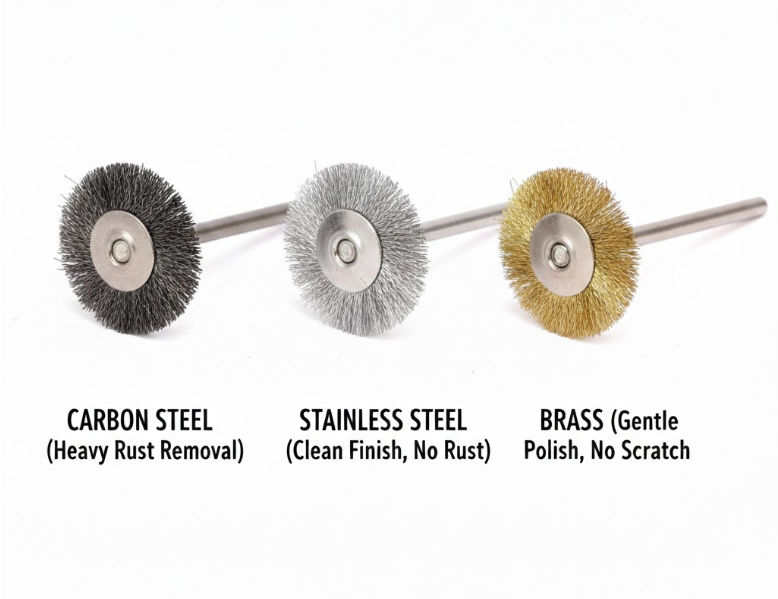
Carbon Steel Brush
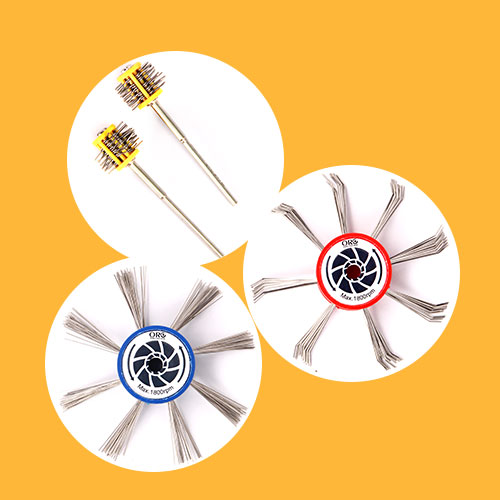
These are the powerhouses of the rotary world. Carbon steel bristles are stiff and incredibly aggressive. They are designed for high-strength tasks where muscle is required.- Best Uses: Choose these for heavy-duty rust removal on cast iron pots or steel tools. They are perfect for non-precision parts with thick oxidation.
Stainless Steel Brush
Stainless steel wire does not oxidize or leave "after-rust." This makes it essential for high-end metalwork. It provides a clean finish without contaminating the surface.- Best Uses: These are ideal for aluminum, stainless steel, or silver jewelry.
- Expert Tip: You must use stainless steel on aluminum. Regular steel leaves tiny iron particles behind. These particles will eventually cause the aluminum to corrode and pit.
Brass Brush
Brass is much softer than steel. Because of this, it provides a gentle touch that won't spark or scratch. It is the safest choice for delicate surfaces.- Best Uses: Use brass for cleaning precious antiques, old coins, or musical instruments. It is also perfect for spark plugs because it is non-sparking.
III. Shape Selection
The right shape helps you reach your target easily. You won't have to struggle with awkward tool angles.
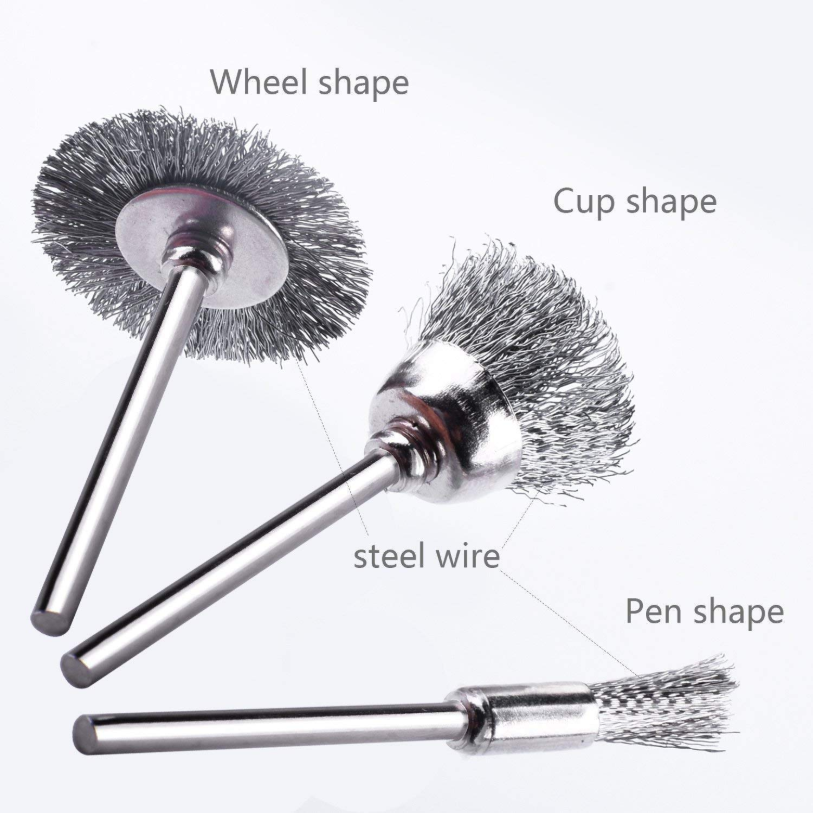
Wheel Brush – The Narrow Gap Expert
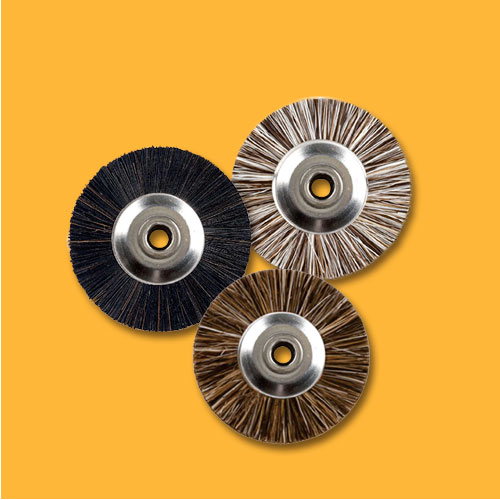
The wheel brush uses only its outer edges. This makes it perfect for cleaning narrow gaps. It excels at clearing grooves and recessed lines. It is very precise.Cup Brush – The Flat Surface King
When you have a large, flat area, choose the cup brush. It handles paint and rust removal with even force. The flat contact area saves time. It covers more ground quickly.End Brush / Pen Brush – The Deep Hole Specialist
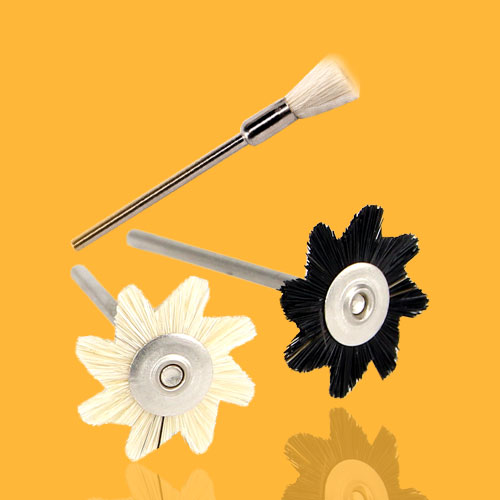
These brushes are narrow and focused. They are specifically designed for tackling tight corners. They reach into internal holes and blind spots easily. They are small but effective.IV. Parameter Settings: Finding the Sweet Spot
The right material still needs the right settings. Otherwise, you risk damaging your tool or the brush.
The Golden Rule of RPM
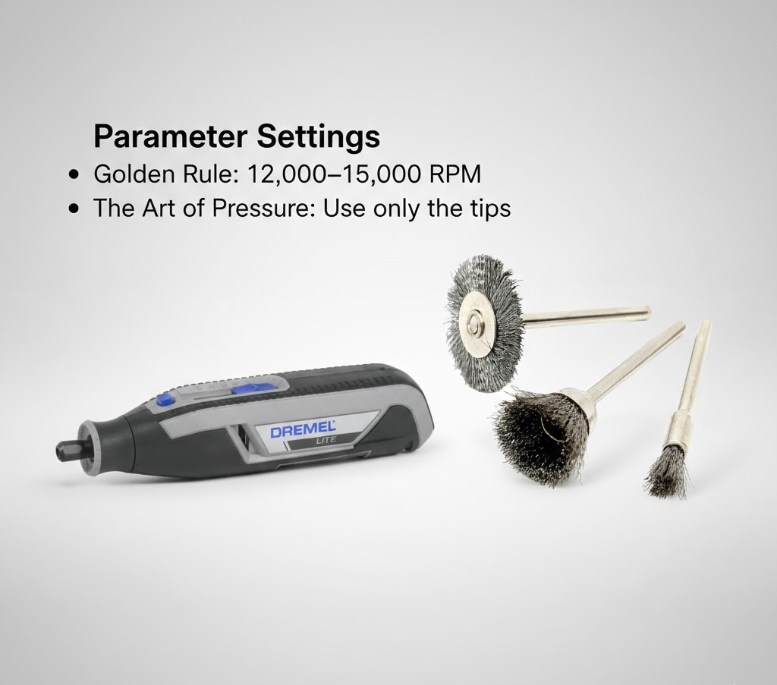
Faster is not always better. Excessive speed creates instant, intense heat. This heat softens the bristles or makes them snap off.- The Goal: For most metal cleaning, stay between 12,000–15,000 RPM. The tool should feel smooth in your hand.
The Art of Pressure
Always work with the bristle tips. Do not apply heavy side pressure.- The Test: If the bristles are bent, you are pushing too hard. Too much force reduces efficiency. Let the tips do the cutting.
V. How to Tell if You’ve Chosen Correctly?
Success is easy to spot. Check these three signs:- The Surface: The dirt is gone, but there are no deep metal gouges.
- The Bristles: After five minutes, the bristles are still straight.
- The Sound: The motor hums smoothly without a struggling, dull sound.
VI. Safety and Maintenance
Safety is a priority. Wire brushes produce significant flying debris. Wires can snap at high speeds. Always wear safety glasses.To maintain your brushes, use a scrap piece of hardwood. If the bristles become clogged, run the brush in reverse on the wood. The friction cleans the gunk out instantly.
Summary
Selection follows a simple three-step logic:- Step 1: Check the material (Steel, Stainless, or Brass).
- Step 2: Check the shape (Wheel, Cup, or Pen).
- Step 3: Perform a light test run to find the right speed.