

Industry News
How to Choose a Buffing Wheel for Your Bench Grinder
The wrong buffing wheel can leave you fighting heat, drag, and a dull finish. Your bench grinder can do far better with a wheel that actually fits the job. Material, construction, and size are the three choices that matter most.
This guide shows you how to pick the right one—quickly and clearly.I.How to Choose the Material of the Buffing Wheel
Choose Wheel Material Based on Cutting Strength
Selecting the right wheel material starts with understanding how much cutting power you need and what final finish you want.
- Sisal: Best for heavy rust removal, deep scratch removal, or rough polishing stainless steel. It delivers maximum cutting force but leaves a coarse surface.
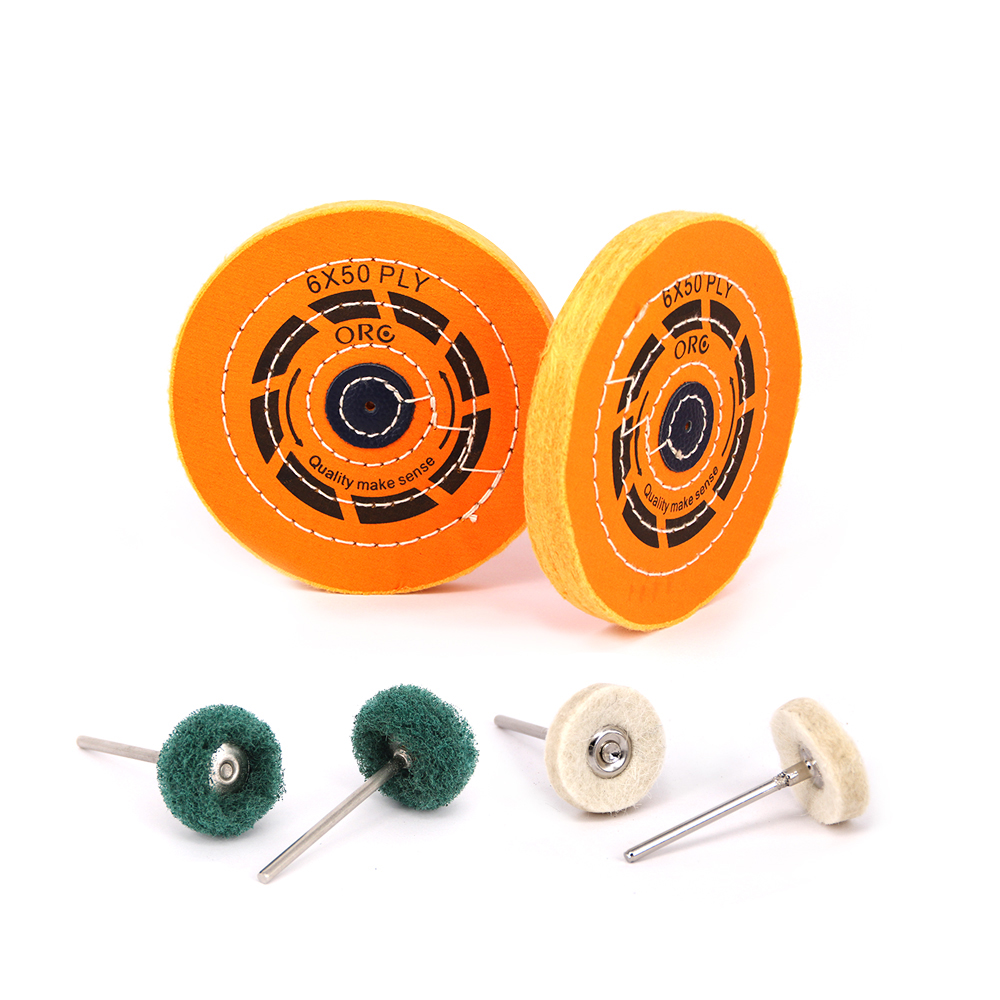
- Stitched Muslin: Ideal for general medium cutting and initial polishing. Works well on aluminum, copper, brass, and steel. It removes marks left from rougher stages and prepares the surface for finer work.
- Flannel / Suede: Extremely soft and used only for achieving a high-reflective “mirror” finish, especially on jewelry or softer metals. It performs minimal cutting and maximizes shine.
II.How to Choose the Polishing Wheel Structure
Choose the Structure by Density, Flexibility, and Heat Control
The wheel’s construction determines its stiffness, compliance, and heat management—factors that directly influence polishing performance.
- Sewn / Stitched: Higher density and hardness for increased cutting force. Ideal when you need stronger pressure and faster material removal.
- Loose / Unstitched: Soft and flexible, making it suitable for final finishing or low-heat applications. It follows contours well and reduces the risk of overheating.
- Pleated / Ventilated: Designed for better airflow and superior heat dissipation. The best choice for long-duration or high-intensity polishing where overheating is a concern.
III.How to Choose Polishing Wheel Specifications and Sizes
Choose Wheel Diameter Based on Grinder Speed and Guard Limits
Specifications must match your bench grinder’s design and safety requirements to ensure stable performance.
- Diameter: Choose a wheel size that fits within your grinder’s guard limits. Generally, higher grinder speeds allow for larger wheels, but never exceed what the guard permits. A larger wheel increases polishing efficiency.
- Bore (Mandrel Bore Size): Must match your grinder’s arbor precisely. If the bore doesn’t match, use a proper bushing—but never use a wheel with an oversized bore without secure support.
- Thickness: Select thickness based on the contact area you need. You can use a thicker wheel for wider coverage or combine multiple thin wheels to build the desired width.
IV. Quick Guide to Choosing Polishing Wheels
Use this table to match your project needs to the right wheel setup.| Requirements (Desired Results) | Material Recommendation | Recommended Structure | Requirements (Desired Results) |
| Oxidation Removal / Scratch Removal | Sisal | Sewn Type | Oxidation Removal / Scratch Removal |
| General Polish | Stitched Muslin | Sewn Type | General Polish |
| Mirror Finish | Flannel | Loose Type | Mirror Finish |
| Long-Term / High-Heat Work | Any Material | Pleated Type | Long-Term / High-Heat Work |
Conclusion
Choosing the right polishing wheel is a balance between cutting strength, finishing requirements, and equipment compatibility. When you understand how material, construction, and size interact, selecting the correct wheel becomes simple—and your bench grinder becomes a powerful, precise polishing tool.Ready to put this into practice? We offer a full range of professional-grade polishing wheels and bushings. Visit the Orbrush website to find the wheel that matches your workflow and helps you achieve a professional finish every time.